
Cecily Duchess of York: the iron matriarch at Berkhamsted
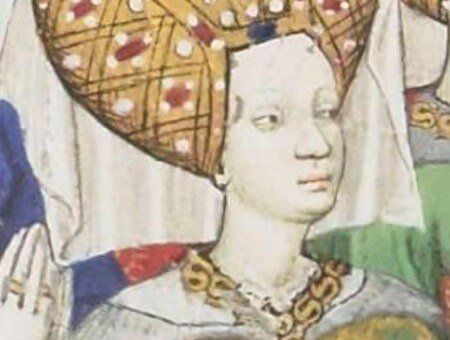
The last person to live at Berkhamsted Castle, Cecily Neville (3 May 1415–31 May 1495) was the wife of Richard, Duke of York, mother of Edward IV and Richard III, and one of the most formidable political players of 15th-century England.
Cecily Neville lived until the age of 80, when many at that time were lucky to reach 40 – and her long life gave her the rare vantage of watching a dynasty rise, tear itself apart, and rebuild around her children.
Cecily was about nine when she was betrothed by her father to his 13-year-old ward, Richard Plantagenet, 3rd Duke of York. Cecily and Richard were married by October 1429, just five years later.
Her husband, the Duke of York, was the leading contender for the throne of England from the House of York during the Wars of the Roses until he died in 1460. Their son Edward assumed the throne as Edward IV in 1461, after the deposition of King Henry VI of the House of Lancaster.
Cecily’s role in the Wars of the Roses was as a dynastic strategist whose influence often surfaced in moments of crisis. After her husband’s claim to the throne ignited open conflict with Henry VI’s regime, Cecily became an anchor for Yorkist legitimacy. She remained in London when Richard went into exile, a deliberate decision that allowed her to represent Yorkist authority in the capital and maintain relations with civic elites.
During the 1450s, as tensions sharpened, Cecily was known to have petitioned on behalf of Yorkist supporters and served as mediator between rival noble factions. When her husband and second son Edmund were killed at Wakefield in 1460, Cecily stepped into a visibly political role: she secured sanctuary for her younger children, preserved estates at a moment when confiscation seemed inevitable, and rallied Yorkist households to continue the claim through her son Edward.
It was during this period that she deliberately styled herself ‘mother of the king’, asserting that Edward had been born to inherit rather than seize power. Her public alignment with Edward’s accession in 1461 – appearing at court, issuing gifts, and confirming patronage networks – helped stabilise a regime that was, at first, fragile and contested.
In 1469, Edward IV granted Berkhamsted Castle and its manor to his mother, and by 1471 the duchess, then aged 56, had made the castle her principal home.
When Edward IV died in in 1483, he left the throne to his 12-year-old son, Edward V. But quickly the young king and his siblings were declared illegitimate and Cecily’s youngest son became Richard III. Richard visited Berkhamsted in May 1485, two months before he died at the Battle of Bosworth. The new king, Henry VII, married Edward IV’s eldest daughter, leading Cecily to adopt the title ‘grandmother of the queen of England, duchess of York’.
Known in her own time as ‘Proud Cis’, a nickname that captured both her lofty lineage and her unbending sense of dignity, Cecily embodied the formidable aristocratic womanhood of the 15th century. She was tall, imposing, devout, and politically perceptive.
Berkhamsted Castle was a place of quiet after decades of upheaval, yet also a seat of real authority – one from which she managed extensive estates, oversaw tenantry, and received a constant stream of visitors who still regarded the dowager duchess as a crucial figure in national life.
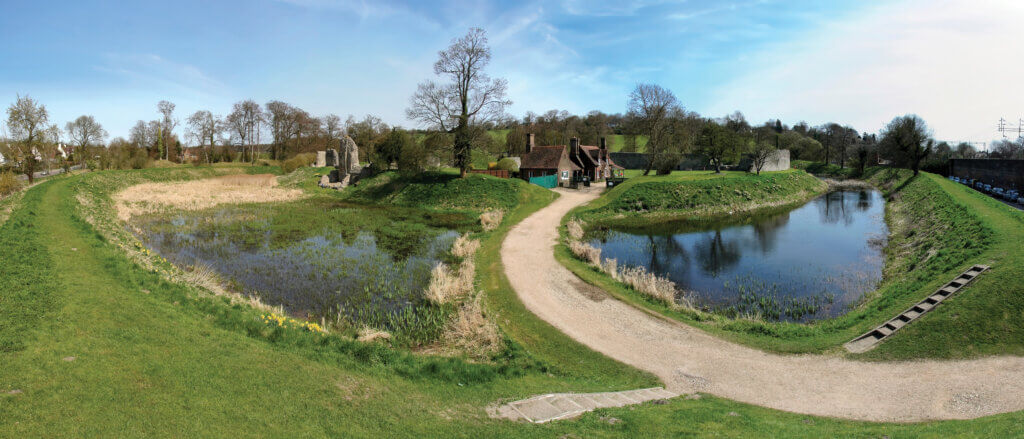
In Cecily’s time the castle was no romantic ruin. Its curtain walls, gatehouses and hall still functioned as a working noble residence.
Modern readers often meet Cecily through Philippa Gregory’s Cousins’ War novels, where she appears as a stately, sharp-eyed presence whose piety competes with her iron commitment to her family’s political destiny.
Gregory’s portrayal is necessarily dramatised, but it rests on real historical facts: Cecily’s formidable self-possession, her ability to manoeuvre amid shifting alliances, and her unshakeable belief in the legitimacy of her son Edward’s claim.
At Berkhamsted, her politics settled into a different rhythm but didn’t disappear. Cecily’s household was a centre of regional authority, and her presence a reminder that dynastic continuity rested not only on kings but also on the women who raised, advised and sometimes shielded them.
We might picture Cecily at Berkhamsted as a tall figure wrapped against the damp, poring over accounts by hearthlight, receiving petitions from tenants, bending an ear to clerics and envoys.
She died on 31 May 1495 at Berkhamsted, leaving a world that had been remade by the struggles she had lived through and helped to steer.
She bequeathed rich vestments from her chapel to St Peter’s Church, including an embroidered cloak of blue and gold silk, and is commemorated in a piece of Victorian stained glass that depicts her coat of arms.
The church also houses a memorial brass to Robert Incent, Cecily’s secretary at Berkhamsted, and whose son John went on to found Berkhamsted School.