
Champneys – 100 Years of Wellness
Now a go-to destination for celebrity clientele, Champneys’ story began with a determined boy from Latvia…
In the tranquil heart of the countryside, near Wigginton, surrounded by 170 acres of rolling parkland, sits a luxury health resort that has quietly shaped the nation’s wellness landscape for a century.
This year, Champneys Tring marks its 100th anniversary, celebrating its journey from radical health retreat to celebrity-endorsed spa and holistic haven. But behind the champagne receptions and spa treatments lies a compelling origin story – one that begins not with aristocracy or affluence, but with a sickly teenage boy who refused to accept his fate.
Stanley Lief was born in Latvia in the early 1890s, and by the time he was a young child, his family had moved to Johannesburg in search of better prospects – and, crucially, a better climate for Stanley’s health.
Diagnosed with an incurable heart condition and given just five years to live, the outlook was bleak. But Lief, stubborn and curious even as a child, began a quest that would not only change his life but shape the future of wellness in Britain.
Influenced by the early physical culture movement and inspired by American health pioneer Bernarr Macfadden’s writings on exercise, nutrition, and ‘Nature Cure’, Lief overhauled his lifestyle.
By 16, he considered himself completely cured – thanks, he believed, to a combination of diet, osteopathy, and natural therapies. His experience sparked a lifelong mission: to help others find healing outside the confines of conventional medicine.
Determined to deepen his understanding, Lief travelled to the US to study naturopathy and osteopathy under Macfadden himself, then moved to the UK to run an affiliated wellness centre in Brighton, before opening his own private practice in London.
It was in 1925 that he took a bold step: purchasing the Champneys estate near Tring from the Rothschild family. The house itself dated back to 1874, built in French Second Empire style on land once owned by Thomas Cranmer, the Archbishop of Canterbury. But it wasn’t the architecture that drew Lief in – it was the peace, the seclusion, and the potential to build something revolutionary.
He transformed the stately home into the UK’s first Nature Cure resort, a pioneering sanctuary focused on rest, recovery, and natural health. Guests came for the fresh air and beautiful surroundings, but stayed for the science-backed healing: hydrotherapy, massage, diet, fasting, and exercise – all administered with Lief’s unique, compassionate approach.

Lief’s influence extended well beyond Tring. In 1936, he founded the British College of Naturopathy, later renamed BCOM, to train future generations in the philosophy and practice of natural healing.
He also launched Health for All, a magazine that brought his ideas into homes across the UK, spreading awareness of holistic health long before it became fashionable.
Despite resistance from the medical establishment, Lief’s reputation grew. His clinics were well attended, his methods respected, and his results compelling. He served as Dean of BCOM until 1963 and was three times President of the British Naturopathic and Osteopathic Association. When he died in 1962, while on holiday in France, he left behind not just a spa, but a legacy – a movement toward preventative care, wellness, and self-empowerment.
The Tring establishment remained a health retreat after Lief’s death, adapting with the times while maintaining its core ethos.
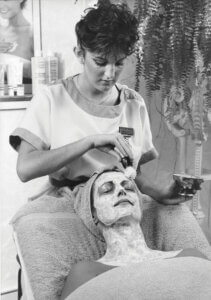 In the 1970s, it was managed by Tanya Wheway and her husband Allan. They took over the management of the resort in 1972 and gave it its current Champneys moniker, as well as a new holistic vision that concentrated not only on the body but on the mind and spirit too.
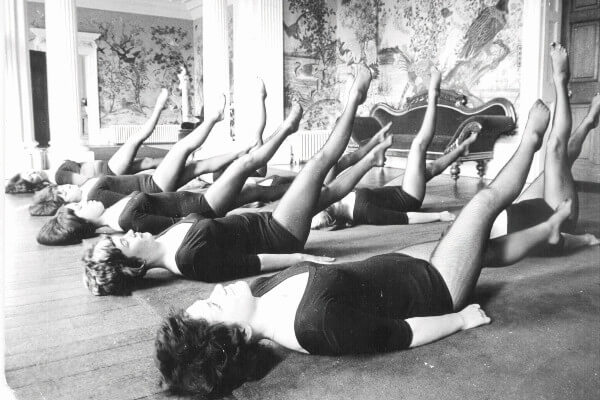
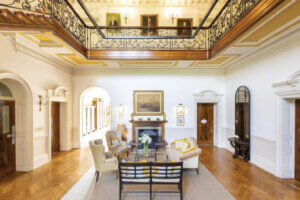
Today, Champneys boasts state-of-the-art facilities, but back then there wasn’t even a gym, and the drawing room was used for exercise classes – once the furniture had been pushed out of the way to make space!
In 2002, the estate was bought by Stephen Purdew, whose family had made their name in the wellness world through slimming clubs and spa resorts. Under the Purdew family, Champneys expanded, and modernised – incorporating new technologies, global spa treatments, and luxury touches, while honouring the site’s naturopathic roots.
Today it offers everything from state-of-the-art skincare to nutrition consultations, yoga retreats, and even glamping under the stars. Its guest list reads like a red carpet roll call: Naomi Campbell, Brad Pitt, Princess Diana, Daniel Craig, and Kylie Minogue have all visited, along with more recent fans such as Gemma Collins, Stacey Solomon, and Dani Dyer.
As the resort celebrated its centenary, CEO Alan Whiteley said: ‘We’re proud to carry Stanley Lief’s vision forward. For a century, Champneys has been at the forefront of holistic health – blending time-honoured traditions with cutting-edge innovation.’
Quite the journey from the vision of a 16-year-old boy who defied a diagnosis, to a global brand for wellness.
Building on the past
The earliest known reference to the Champneys estate dates to 1307. By 1514, the estate appears in the Tring manor court rolls, and throughout the medieval and early modern periods, Champneys was held by a succession of prominent landowning families tied to the Wigginton area.
For a brief period around 1535, the estate passed into the hands of Thomas Cranmer, Archbishop of Canterbury and chief architect of the English Reformation under King Henry VIII. Though his ownership was shortlived, it links the estate to one of the most transformative figures in British religious and political history.
The estate was eventually inherited in 1871 by the Rev. Arthur Sutton Valpy, who undertook a complete reconstruction of the original house.
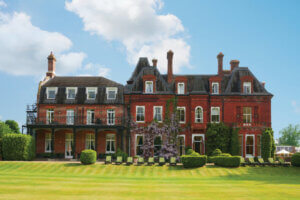
In its place, he commissioned a grand new residence in the fashionable French Second Empire style, characterised by its mansard roofs, ornate dormer windows, and classical detailing. Completed in 1874, the new house was set within meticulously landscaped grounds that reflected the Victorian era’s taste for formal gardens and sweeping lawns.
The estate’s grandeur soon caught the attention of one of the most influential families in British society – the Rothschilds. In 1900, Champneys was purchased by Emma Louisa von Rothschild, the wife of Nathaniel Mayer Rothschild, the 1st Baron Rothschild. She is believed to have acquired the estate with the intention of using it as a dower house – where a widow would retire to a separate residence following her husband’s death.
The Rothschilds were already deeply embedded in the fabric of the local community. The family had owned Tring Park since 1872. Dividing their time between their country seat and their London residence at 148 Piccadilly, they played a prominent role in both rural and metropolitan society.