
Follow the Bard to Stratford-upon-Avon
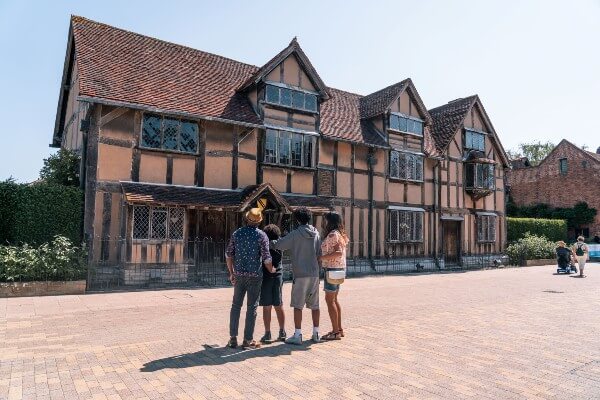
Lyn Drummond joins the growing surge of visitors heading to Stratford-upon-Avon, influenced by the success of the film Hamnet.
The success of the BAFTA and Oscar-nominated film Hamnet with Jessie Buckley winning an Oscar for best actress for her portrayal of Shakespeare’s wife Anne (Agnes) Hathaway has notably boosted tourism to William Shakespeare’s historic locations in Stratford-upon-Avon.
Hamnet, based on Maggie O’Farrell’s 2020 novel, fictionalises the relationship between Shakespeare and Anne and the tragic death of their son Hamnet in 1596, which was purported to inspire The Bard’s Hamlet.
Though not filmed in Stratford-upon-Avon, The Shakespeare Birthplace Trust reported that visitor numbers to the town and its area rose approximately 15-20% across all managed sites since Hamnet’s release in January.
Key sites benefiting from this tourism boom include Shakespeare’s birthplace in Henley Street, where the young playwright lived and his father worked as a glove maker, and Anne Hathaway’s cottage, where Shakespeare courted his future wife.



Secrets and stories
You enter the ever-changing world of The Royal Shakespeare Company (RSC) when you go into its exhibition, The Play’s The Thing, which is now a permanent exhibition. From Titania to Tinkerbell, Rome to Wonderland, the collection contains a huge number of objects that reveal the company’s 100-year history.
Started by Charles Edward Flower in 1879, the collection spans from the 1600s to the present day, and offers an insight into the history of performance, The Shakespeare Memorial Theatre and RSC.
Stories of often ground-breaking performances recollect developing stagecraft, how performance has changed over time and the early stage careers of familiar screen actors such as Judi Dench, Patrick Stewart and David Tennant (a former Dr Who).
The interactive exhibits are for all ages, including a virtual costume mirror where you can change outfits, take a photo of yourself on stage and receive the photo by email.
Visitors are encouraged to explore the plays, the theatre-making process, Shakespeare, Elizabethan Theatre and why we have theatre today. They will discover some of the trade secrets of productions, such as how costumes are made and effects achieved.
Inspire your inner inventor
A short walk from The Royal Shakespeare Company takes you to The Mechanical Art and Design Museum (The MAD Museum) at 4-5 Henley Street.
Museum founder Richard Simmons explains his motives for the museum to Living: ‘In a world full of mobile phones and computer screens, our museum, by encouraging visitors to interact with wonderful feats of engineering and inspire their inner inventor in the process, provides a welcome and absorbing distraction for children and adults alike.’

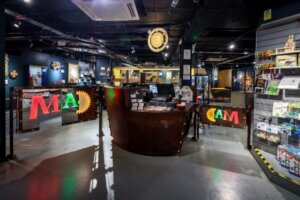
From the moment you step inside you are surrounded by a world of whirring gears as the place is home to more than 80 pieces of kinetic art, including rolling ball machines, automata and robotics. Each piece is designed to move and interact with visitors.