
Is Pilates right for me?
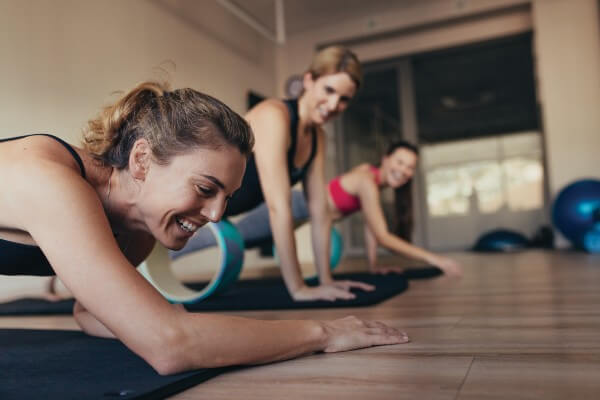
Long-time Pilates user Beth Roberts’ answer is a definite yes.
‘Pilates is designed to be adapted for anyone, but choosing the right studio for you deserves a little thought,’ the Tring resident says.
Joseph Pilates developed his groundbreaking method during WW1 to support the rehabilitation of injured soldiers. After the war he settled in New York, opening his first studio in 1926 and introducing his approach to a wider audience.
Its global popularity has grown steadily, with a huge range of classes now available. Medical practitioners continue to recommend Pilates as a low-impact way to help maintain fitness, manage pain and support recovery from injury.
The benefits are broad: improved muscle and bone strength, posture, balance, flexibility, coordination and mental wellbeing. But Joseph Pilates always intended the method to be tailored to each student, not delivered as a one-size-fits-all activity.
‘Pilates exercises draw on a deep understanding of the human body, addressing underlying structural imbalances that are often unique to the individual. My own relationship with Pilates has certainly evolved with my body’s needs,’ Beth explains.
‘I began with a postnatal class before joining a mixed ability mat group. Following two major surgeries I needed more focused attention. ‘The lovely group I practise alongside spans all ages and abilities: some recovering from injury or operations, some managing long-term health conditions, others simply wanting to bring more movement into everyday life.
‘Even in our small town, there are several excellent studios to choose from, offering everything from mat work to private reformer sessions. A good studio will provide a high level of individual tuition, honouring the Pilates philosophy of adaptive exercise.’
Beth suggests seven important points to consider before beginning the exercises.
- Know your body: be honest about the level of individual attention you’ll need.
- Consider group size: small group, larger class or one-to-one. Whatever helps you feel supported.
- Ask about training: don’t be afraid to ask where the instructors trained, who with, and to what level.
- Ask about equipment: Joseph Pilates invented more than 20 pieces of apparatus – which does the studio use?
- Be consistent: progress comes from regular practise with a teacher you trust.
- Look for flexibility: a studio with adaptable scheduling helps you stay committed.
- Be prepared to commit: Pilates gives back what you put in – and more.
Beth stresses that Pilates is a lifelong practice, and the right studio will help you progress safely and confidently.
‘Remember, it doesn’t need to be hard to be effective. Thoughtful, precise movement tailored to your body is what truly makes the difference.’