
Understanding inflammation through the lens of yoga therapy
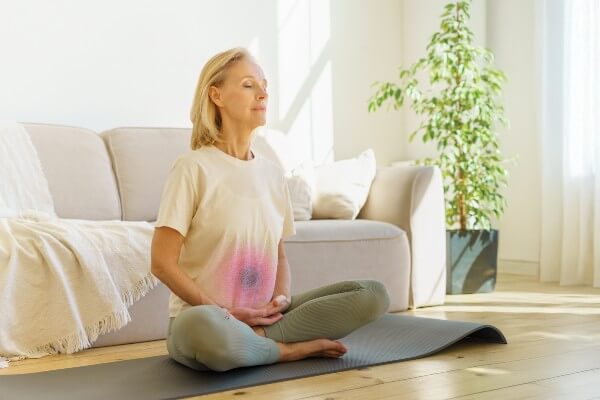
Carmen Karady explains how yoga can be used to calm systemic inflammation.
Inflammation is the body’s natural way of protecting itself – a built-in alarm system that responds to stress, strain, and imbalance.
In its short-term form, inflammation helps us heal; but when it becomes chronic, the body shifts into a state of ongoing alertness that quietly drains energy, disrupts digestion, affects immunity, and heightens physical and emotional sensitivity.
In yoga therapy, we view inflammation as a whole-body (holistic) phenomenon. When the body’s tissues are irritated, the breath becomes shallow, the mind contracts, and the nervous system becomes reactive.
Likewise, when the nervous system is stuck in sympathetic activation – living in an anxiety ‘fight-or-flight’ state – the body is more prone to inflammatory responses.
A yoga-therapeutic approach coaxes the body out of reactivity and into repair. So rather than fighting inflammation with medication, we create the inner conditions that allow healing to occur naturally.
Through grounding postures, calming breathwork, and quiet inner attention, we learn to shift from tension to ease, from constriction to openness.
Below are gentle, yoga therapy-based practices to calm systemic inflammation:
1. Cooling, lengthened exhalation breathing (5 min)
This reduces systemic inflammation by shifting us into the parasympathetic (healing) state.
How:
- Sit or lie comfortably.
- Inhale softly through the nose for a count of four.
- Exhale slowly through the nose or mouth for six to eight counts.
- Let the face, jaw, and throat relax as you breathe out.
Why it helps:
Lengthened exhalation calms inflammatory pathways.
2. ‘Inflammation off switch’ vagal stroke (2 min)
A gentle technique to quieten the nervous system and reduce inflammatory signalling.
How:
- Lightly place two fingers just behind your ear.
- Very slowly stroke down the side of your neck toward the collarbone. (This follows the vagus nerve branch.)
- Repeat for 1–2 minutes on each side. Feel for: warmth, softening, or even a sigh.
3. Restorative heart-opening stretch (3–5 min)
This reduces the reactive ‘tension’ created during flare-ups.
How:
- Roll a towel into a small roll.
- Place it lengthwise under your spine (upper back).
- Rest your arms out to the sides.
- Knees bent, feet on the floor.
Why:
Gentle chest opening reduces upper-body inflammation load.
4. Warm belly–breath with hand support (3 min)
Supports digestion and reduces gut-driven inflammation.
How:
- Place both hands on your lower abdomen.
- Inhale: soften your belly into your hands.
- Exhale: feel your body get heavier and more grounded.
Why:
Softening the abdominal wall relaxes the vagus nerve.
5. Joint-friendly movement flush (5 min)
Very gentle, fluid movements reassure the immune system ‘I’m safe. It’s all right’. Movements should be 70% effort, and not stretching into pain.
6. Cooling forward fold rest (2–3 min)
For a feeling of overwhelming inflammation.
How:
- Sit on a chair.
- Place forearms on thighs.
- Let your head hang, or rest it on a pillow.
- Breathe slowly.
This position down-regulates the sympathetic system and cools inflammation.
7. Evening ‘inflammation release’ ritual (3–8 min)
Perfect before bed or during flare-ups.
Steps:
- Lie on your back with knees bent.
- Place one hand on your heart, one on your lower belly.
- Inhale into the belly.
- Exhale into the heart area (imagine softening there).
- Whisper internally: ‘soften, slow, safe.’
Even 3 minutes signals your immune system to reduce its defensive response. Over time, these simple, mindful practices help reduce reactivity, and support the body’s natural capacity to repair itself. Simply select the exercise(s) you find most beneficial, and do these on a routine basis. In this way, yoga therapy becomes not just a method of relief, but a pathway toward long-term wellbeing.
 About Carmen: Carmen has a PhD in international education. She has been a certified yoga teacher since 2001, and has received advanced training in Yoga Nidra and yoga therapy with Dr Kamini Desai, PhD, Psychology. Currently, Carmen‘s practice is located in Budapest. She specialises in Yoga therapy for seniors. Contact: ckarady@mac.com