
What’s in a name?
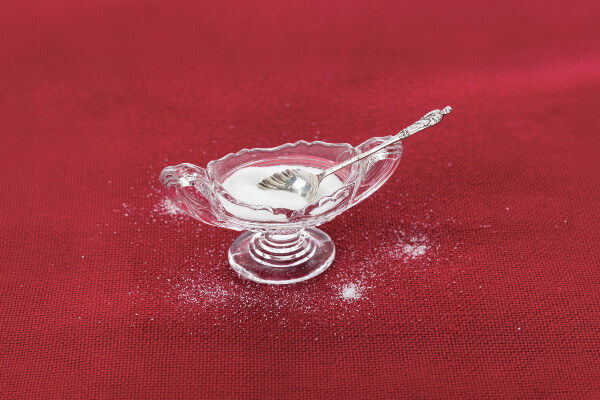
John Bly, well-known antiques expert, and proud member of one of Tring’s old families, writes his first column for Living Magazines.
At my grandmother’s knee was where I learned how the things we use every day link us to the past as tangible history.
It was the summer of 1943 at the back of our antiques shop on Tring High Street, which is now Tarboush Restaurant, where every night she and my mother would carefully remove all the antiques from the window in fear of bomb damage.
Although the Blitz had ended, the air war continued. There were items of glass, pottery, pewter, brass, ivory, enamel, silver and of course treen [a collective term for small, handmade functional household objects carved or turned from wood]. I heard how each was made, along with its story – information which was tucked away unused for 20 years, but which I can recall in detail; how to find the hidden dates on a Bacarat paperweight or spot the genuine Mary Gregory glass.
Each piece had a story with a keynote, like that of the spoon, the ancient functional object formed first from natural sources such as shells and horn. Then from humble materials such as wood and pewter, right up to delicate enamels, silver and gold – at one time becoming a symbol of status and wealth.
Until the early 1600s, the bowl of the spoon was fig-shaped and had a simple stick handle, the end of which could be cut off at an angle to make a ‘Slip Top’ or be cast with a disc end to make a ‘Seal Top’.
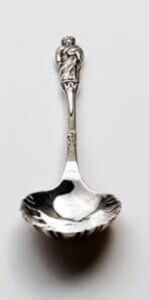 Now it’s well known that boys have forever whittled spoons from wood for their loved one, and the term ‘spooning’ emanates from that. From the 1590s, it became popular for the well-to-do godfather to give the godchild a silver spoon or set of spoons, the end of each handle being cast with a figure representing one of the 12 apostles.
These are known as ‘Apostle Tops’, and are rare collectors’ items, much copied in Victorian and Edwardian times, so beware and note the hallmarks. This explains the origin of the expression ‘being born with a silver spoon in your mouth’.
However, the word for spoon in the 17th century was ‘spone’ and the person gifting it was the ‘sponesor’, which is where the word sponsorship comes from.