
Theatre with a sting in the tale
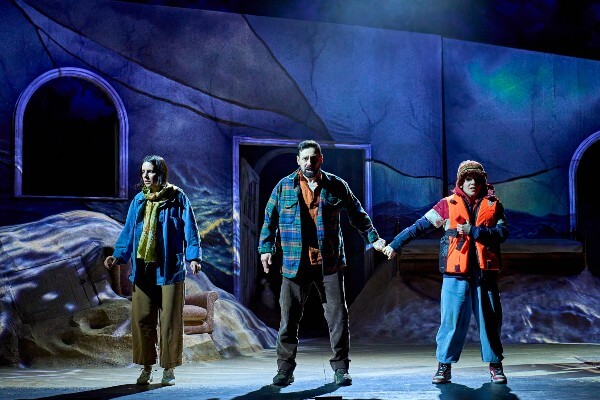
Naomi MacKay watched The Beekeeper of Aleppo, which runs until Saturday 7 March at Aylesbury Waterside Theatre.
The Beekeeper of Aleppo – adapted from Christy Lefteri’s bestselling novel by Nesrin Alrefaai and Matthew Spangler – returns to the stage in a 2026 touring production that builds on its acclaimed 2023 world premiere at Nottingham Playhouse.
Directed by Anthony Almeida, this touring version opened at Nottingham before moving to venues across the UK and Ireland.
At its heart, The Beekeeper of Aleppo is an intimate, visceral portrayal of one couple’s flight from war and their desperate attempt to find each other and a place of safety. The story tracks beekeeper Nuri and his wife Afra as they are forced to flee war-torn Syria, endure perilous crossings and bureaucratic limbo, and confront the emotional cost of loss, trauma and displacement.
The set design by Ruby Pugh is deceptively minimalist – a sandy floor scattered with symbolic remnants of home – yet through cleverly used video projections and symbolic transformations (a bed becomes a lifeboat, furniture evokes ruins) it conjures war zones, camps and journeys with cinematic sweep.
Performances are consistently powerful. Adam Sina (Nuri) and Farah Saffari (Afra) anchor the show with deeply human portrayals that balance the physical toll of their ordeal with the emotional fragility beneath. Their chemistry and vulnerability give weight to the production’s emotional core, and moments of silence or repetitive physicality become haunting, embodied metaphors of trauma and hope.
The supporting cast also adds vital texture. Dona Atallah’s turn as the young boy Mohammed/Sami is somewhat ethereal. Joseph Long as the Moroccan Man (and Mustafa) brings some welcome comic moments to the production.
Make no mistake, this is serious theatre, but the small moments of levity and shared humanity provide essential breathing space without undercutting the seriousness of the journey.
The themes of war, violence, loss and mental anguish permeate the narrative – and are sadly more relevant with everything happening in the wider world at the moment – and at times the emotional intensity can feel relentless. But it is precisely this unflinching honesty that gives the production its power: it forces audiences to witness pain and resilience in equal measure. And yet it does it primarily through personal rather than political narrative.
I purposely held off reading the book, as I wanted to watch the play as a standalone piece, while my companion made the effort to finish the novel before the show. So I had to rely on her to tell me that, like many theatre/movie adaptations, there is far more detail in the book, and more opportunity to delve into the psyche of the main characters, and that the ending isn’t quite the same.
Whether a fan of the book or not, this theatrical experience brings contemporary issues to life with compassion, artistry and formidable performances. This is theatre that doesn’t just tell a story – it leaves you moved, unsettled and deeply humanised.
Tickets: www.atgtickets.com/Aylesbury